
Madison City Directory Collections at a Glance
Geography sets the limits here. The documented printed Polk volumes belong to Canton, the Madison County seat, not to Madison the city. That line matters. Treat a surname, a phone number, or a street guide as Madison proof and the whole search goes sideways. No exact printed run of Madison-city directories is confirmed. The wider collection still offers real ways to investigate a Madison family or address through the residents directory network, but every item must carry its own place and period label.
| Collection | Years | Where Held | Access |
|---|---|---|---|
| Canton R.L. Polk city directories | 1963, 1964, 1966, 1968, 1970, 1972, 1974, 1976 | USM guide and catalog, shelf to be verified | Library or archive request; not a confirmed Madison-city run |
| Madison County local history | Early and mid-1800s to present | MCLS branches and the Mississippi Digital Library | Digital items where loaded; originals need special permission |
| MDAH county and court material | Dates vary by series; court catalog reaches territorial era through late 1980s | MDAH catalog, Media Room, and reading rooms | Catalog search, self-serve microfilm, or retrieval |
| Canton Sanborn maps | 1887, 1892, 1905, 1911, 1916, 1925, corrected 1925/1963 | Library of Congress and MSU Special Collections | LOC digital copies or MSU print and special collections |
The University of Southern Mississippi city-directories guide documents the Canton Polk years in detail. MDAH, MCLS, and the historical society each work as a separate access channel rather than copies of one shared shelf. Note: a Canton directory can add county context, but it should never be relabeled as a Madison residents directory.
Madison Directories and Canton's Polk Volumes
Polk volumes earn their keep by working in two directions at once. An alphabetical section can tie a person to an address, a phone number, an occupation, or a marital-status note. It can also record a household relationship. A numerical street guide flips the question. Group householders by address instead. Some books add a buyer's guide, a business classification, and a reverse telephone section. These are collection-level features described by USM rather than a promise that every local volume carries every field.
A common misconception says a nearby county-seat run can fill the Madison gap. It cannot. Canton is the seat; Madison is a separate city. A Canton entry may still help with a county business, a courthouse-square address, a shared surname, or a later move. But it never proves that the same household lived in Madison. Keep the directory's place name in your notes. Then check the address against a deed, a tax parcel, a census page, a newspaper, or a Madison-specific archival item before you call it a match.
How a Madison City Directory Entry Reads
No digitized Madison or Canton entry has a published local abbreviation key. The inventory here therefore describes documented Polk-style possibilities from the USM guide, not the exact layout of any unviewed local page. Copy what the book actually prints. Keep the initials, the punctuation, the street spelling, and any abbreviation just as it stands. Those small details can separate people who share a surname and make a later catalog or newspaper search far more reliable.
| Name | An alphabetized surname with given name or initials. |
|---|---|
| Household relationship | A spouse or other relationship may appear in parentheses when the volume supplies it. |
| Address | A street and number, which may be reversible through a numerical street guide. |
| Telephone | A number when the book lists one, sometimes supported by a reverse telephone portion. |
| Work or business descriptor | An occupation, professional description, or business/classified cross-reference when printed. |
| Household notation | Marital or widow notation may appear under that volume's conventions; any owner or renter-style mark requires the local key. |
- Criss-cross directory
- A directory section arranged by street and number rather than alphabetically, used to read an address in order.
- Householder index
- An address-oriented list of householders that can complement the alphabetical name section.
- Abbreviation key
- The volume's introductory explanation of its own marks and shortened words. Read or photograph that key first because no local key was inspected here.
Never expand a symbol from memory. A relationship mark, a widow notation, or a household symbol works as genealogy evidence only when that specific book's own key supports the reading.
Madison Directory Reverse Street Sections
A reverse section pays off once an address is tied to the right place. It also needs the right year. In a Polk-style volume, the numerical street guide may list householders along a street. A reverse telephone portion can point from a listed number back to a subscriber. Treat both as comparison aids rather than a complete resident roll. Listings omit people, shift between editions, and follow the directory's own collection rules.
Modern address questions need current tools. Use the county's parcel and deed systems. Do not stretch a historical street guide past its time. The old city-directory material shows a dated link among a name, an address, a telephone, or a trade. A present-day property question deserves its own current record trail. Start with the assessor and the recorder.
MCLS Materials for Madison Directory Research
The Madison County Library System is the practical bridge across the missing Madison printed-directory run. Its local-history program preserves family histories, photographs, oral-history interviews, newspaper clippings and articles, and yearbooks. More than 100,000 items have been scanned since 2007 into 14 collections, and the system began its Mississippi Digital Library collaboration with USM in 2010. Most physical originals are at the Canton and Flora branches, even though Madison research may begin elsewhere in the county system.
Digital access is available where an item has been loaded. Physical originals are closed-stack or special-permission material, and staff must be present. Bring photo identification, use pencil-only notes, leave bags out of the research area, and ask staff to make copies. Laptops are allowed. Those rules are especially useful for a house history because a clipping, yearbook, photograph, or oral-history interview can add context without pretending to identify a current household.
MCLS provides Newspapers.com Library Edition and Ancestry access information: Newspapers.com is available in the library and through the stated home-card access, while Ancestry is available at all five branches. Public pages did not expose Madison-specific newspaper title runs, so search the database interface and ask staff which titles cover the target place and year.
Madison Research at the Old Jail
Some Madison County leads never surface in an online catalog. The Canton-Madison County Historical Society solves that with people instead of software. Its Mary King Research Library holds county histories and statistics. It also keeps published family histories, newspapers, microfilm, records, and photographs. That mix often bridges the gaps a Madison residents directory search leaves open. Research happens by appointment at the Old Jail Museum. The address is 234 East Fulton Street, Canton, Mississippi 39046. Call 601-691-4988 first. Confirm access and admission details before you travel.
The Canton-Madison County Historical Society's Old Jail Museum is the building shown above.
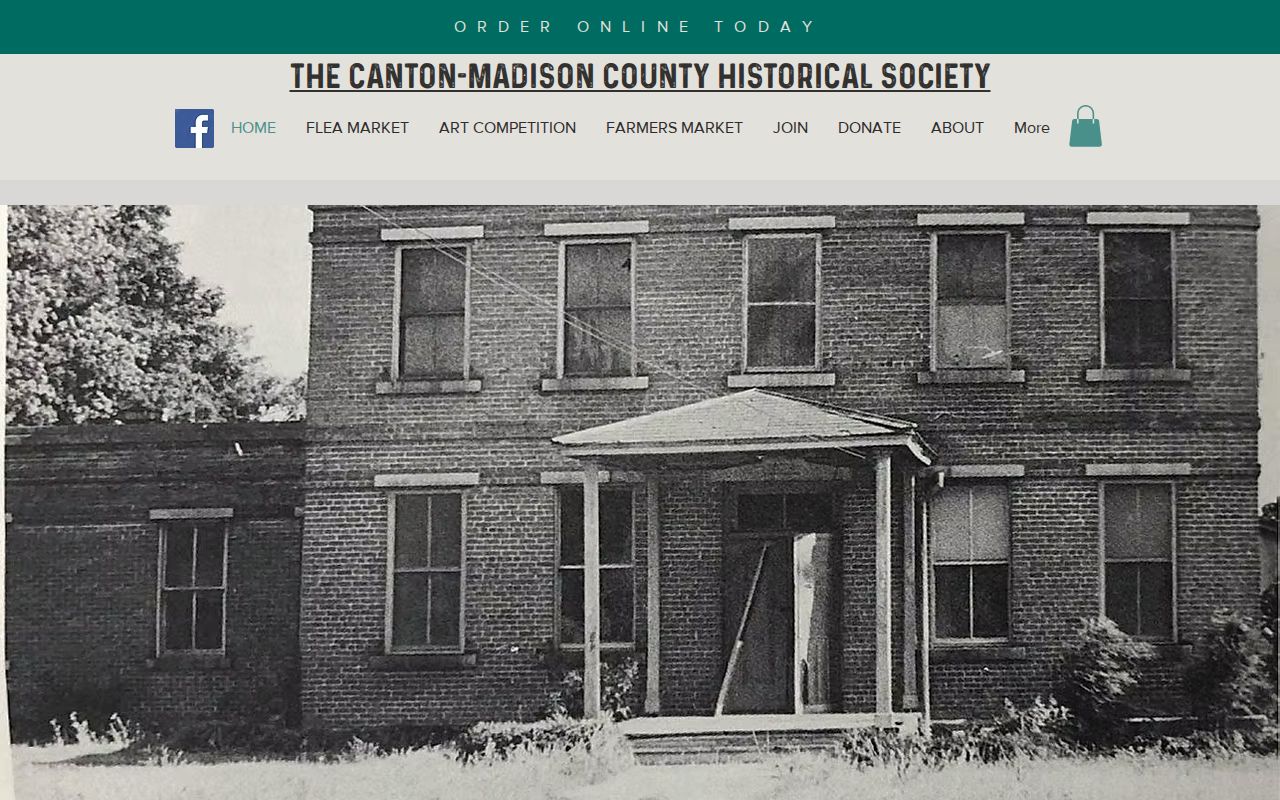
A directory lead that stalls online can pick up again here, because the library pairs street listings with county histories, microfilm, newspapers, and photographs that a modern address search cannot reach. The building itself carries a records story. It opened as the Madison County jail in 1870-71, held prisoners until 1969, and became the Historical Society museum in 1974. That history is real. Still, it is not proof an earlier jail fire erased every county book. The county publishes no exact record-loss inventory, so the fire story stays unconfirmed.
Following Households Through Madison City Directories
Every directory edition records one moment, not a life story. Work through the household year by year. Keep each printed location exactly as published. Keep any modern label you attach to it apart. A new spouse notation or a changed phone number is only a lead. So is a shifted street form. Confirm it in an independent source before trusting it. Census schedules earn their keep here. They catch a household on a schedule the directory never followed.
- Choose the directory year nearest the event and read both the alphabetical entry and the numerical street guide when available.
- Record the address exactly as printed, plus initials, spouse or relationship marks, phone, and occupation or professional wording.
- Compare adjacent editions for a move, changed number, widow notation, or a changed house number.
- Pair the result with the 1950 or an older open federal census, then test the address against deeds, parcels, newspapers, marriage material, cemetery records, probate, or an MCLS yearbook.
- For a Madison address, keep the Canton directory limitation in the notes and use the property trail or local archives to bridge the city-specific gap.
Federal census access follows the 72-year rule. The 1950 census is open. The 1960 count stays closed until 2032. A household that drops out of a directory might have moved, died, changed listing habits, or never been listed, so treat the gap as a prompt for more checking rather than a verdict.
Madison Directory Evidence in Canton Sanborn Maps
Sanborn maps give an address trail a physical layer of buildings and street layout. Canton's documented editions run 1887, 1892, 1905, 1911, 1916, and 1925, plus a corrected 1925/1963 issue. The Library of Congress posts digital copies with no login. MSU also keeps print sets and special collections. The April 1911 Canton item spans nine sheets. Use them to set a business or structure beside a directory address. Just remember these are Canton maps. They do not create a Madison city map run. MDAH opens two more historical doors. Its county-records-on-microfilm catalog filters by county, series, dates, index status, and roll number, while its court-case catalog tracks files by case, year, box, location, and roll. Many cataloged items must be consulted at the Winter Archives and History Building in Jackson, where the reading rooms charge nothing.
Madison Directory Searches Before Modern Streets
Older records speak in vanished place names. A document may say Madison Station, the Illinois Central Railroad stop dating to 1856. It may say Madisonville instead, the extinct Natchez Trace settlement. Neither is a modern street name. Write the source wording down first. Then search separately under the modern parcel situs, postal city, legal description, and E-911 form. A mailing address, a physical site, and a deed description can each name the same land differently.
Historic maps and annexation context help when a street's municipal status shifted. No official Madison renumbering year is on record. So a house-number mismatch should not be blamed on a claimed renumbering. Compare the original form against the deed chain, map evidence, and archival descriptions instead. That comparison settles more than any guess.
Note: Madison Station and Madisonville work as historical search terms. They never substitute for a present-day Madison address.